
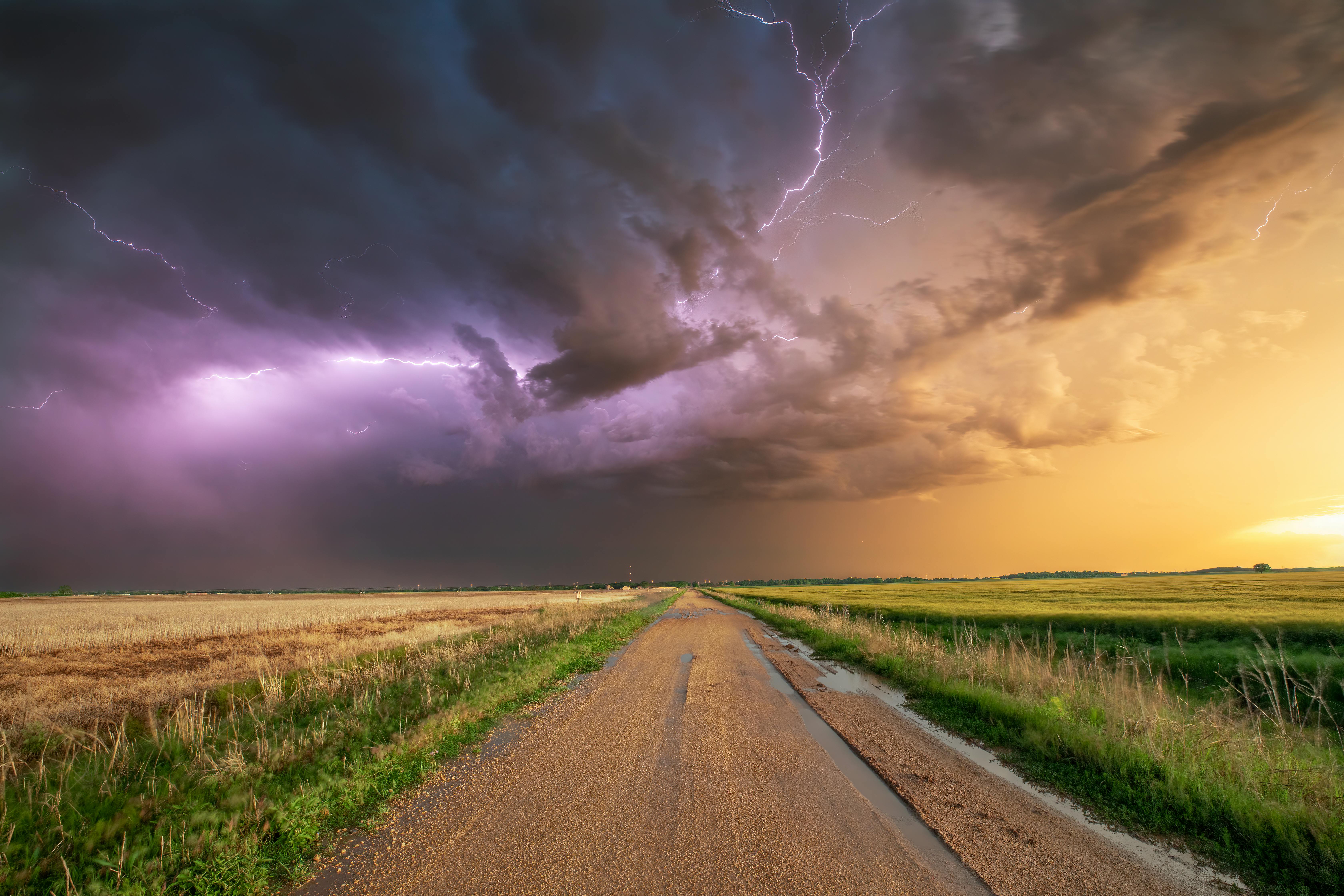
A storm that produces torrential rain and constant lightning may never be classified as severe, while a drier storm nearby is. The word is an operational definition with fixed criteria, and rain is not among them.
What the criteria cover
A thunderstorm reaches severe status if it produces hail above a stated diameter, a wind gust above a stated speed, or a tornado.
Any one of the three is sufficient. A storm meeting none of them is an ordinary thunderstorm no matter how dramatic it appears from the ground.
The thresholds are set where damage to property and injury risk begin to rise steeply, which makes the category a proxy for expected harm rather than a description of intensity.
Why heavy rain is excluded
Flooding is handled by a separate warning system with its own criteria, because the hazard develops on a different timescale and depends on the ground as much as the sky.
The same rainfall produces a nuisance on dry, permeable terrain and a life-threatening flood on saturated or paved ground, so a rainfall rate alone cannot define the risk.
Keeping the two systems separate means a single storm can carry both a severe thunderstorm warning and a flood warning, each describing a distinct threat.
Why lightning is not a criterion
Lightning is present in every thunderstorm by definition, so it cannot distinguish one storm from another.
It remains dangerous and is the reason outdoor activity should stop when thunder is audible, but that guidance applies to all storms rather than to a subset.
Including it would place every storm in the severe category and destroy the warning's ability to convey elevated risk.
How the determination is made in real time
Radar estimates hail size from how the signal scatters, and detects strong winds aloft that may be descending toward the surface.
Those estimates are combined with reports from trained spotters, emergency personnel and the public, which confirm what is actually reaching the ground.
Warnings are issued on expected conditions rather than confirmed ones, since waiting for a report would consume the lead time the warning exists to provide.
Why the storm reports database matters afterward
Confirmed occurrences are logged with time, location and description, forming the record used to verify warnings and study long-term patterns.
That record is shaped by population as much as by weather, because an event in open country with no observer often goes unrecorded.
Analysts adjust for this when comparing decades, since rising report counts partly reflect more people, more cameras and better communication rather than more storms.