
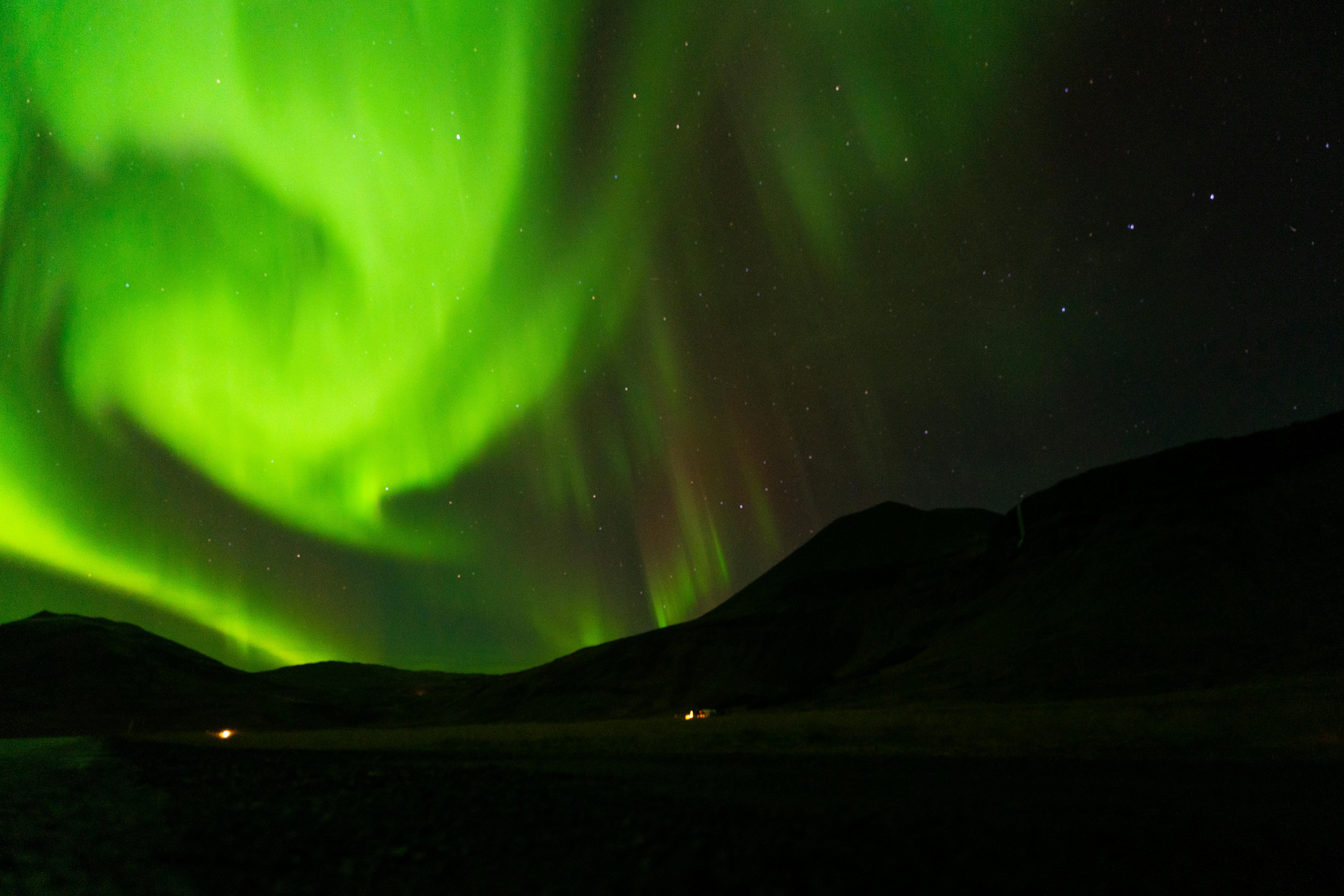
Aurora forecasts are widely shared and frequently disappointing. The gap between a promising number and an empty sky comes from what the forecast actually describes, which is not visibility.
What the index measures
Geomagnetic activity is summarized by an index derived from ground magnetometers that record how much the local magnetic field departs from its quiet baseline.
It is a measure of disturbance rather than of light, and it is reported for fixed intervals rather than continuously.
Higher values indicate a stronger disturbance, which correlates with the aurora extending further from the poles, but the relationship is statistical rather than exact.
Why the oval matters more than the number
The aurora forms in a ring centered on the geomagnetic pole rather than the geographic one, and that ring expands toward the equator as disturbance increases.
Because the geomagnetic pole is offset, the ring reaches lower latitudes on one side of the world than the other at the same level of activity.
This is why a given index value brings the aurora to the northern tier of one continent while leaving another continent at the same latitude with nothing to see.
How the timing works against observers
Direct measurements of the arriving solar wind come from spacecraft close enough to Earth that the resulting notice is short.
Activity also comes in bursts lasting tens of minutes rather than steady hours, so a display can be brilliant and then absent within a single viewing session.
Longer-range predictions issued days ahead are based on the estimated arrival of an eruption and carry uncertainty of several hours in either direction.
Why ordinary weather decides the outcome
The aurora occurs far above the highest clouds, so any overcast blocks it completely regardless of how strong the geomagnetic activity is.
Darkness is equally binding. High-latitude summer nights never get dark enough, which removes the season with the most comfortable viewing conditions.
Moonlight and artificial light both raise the background brightness, and a faint display that a camera records readily can be invisible to the eye near a town.
Why photographs overstate what was visible
A camera accumulates light over an exposure lasting seconds, while the eye integrates over a fraction of a second.
Human night vision is also poor at distinguishing color at low light levels, so a display recorded as vivid green often appears grey to the observer standing beside the camera.
Images shared afterward therefore set expectations that the same event, seen directly, would not have met.