
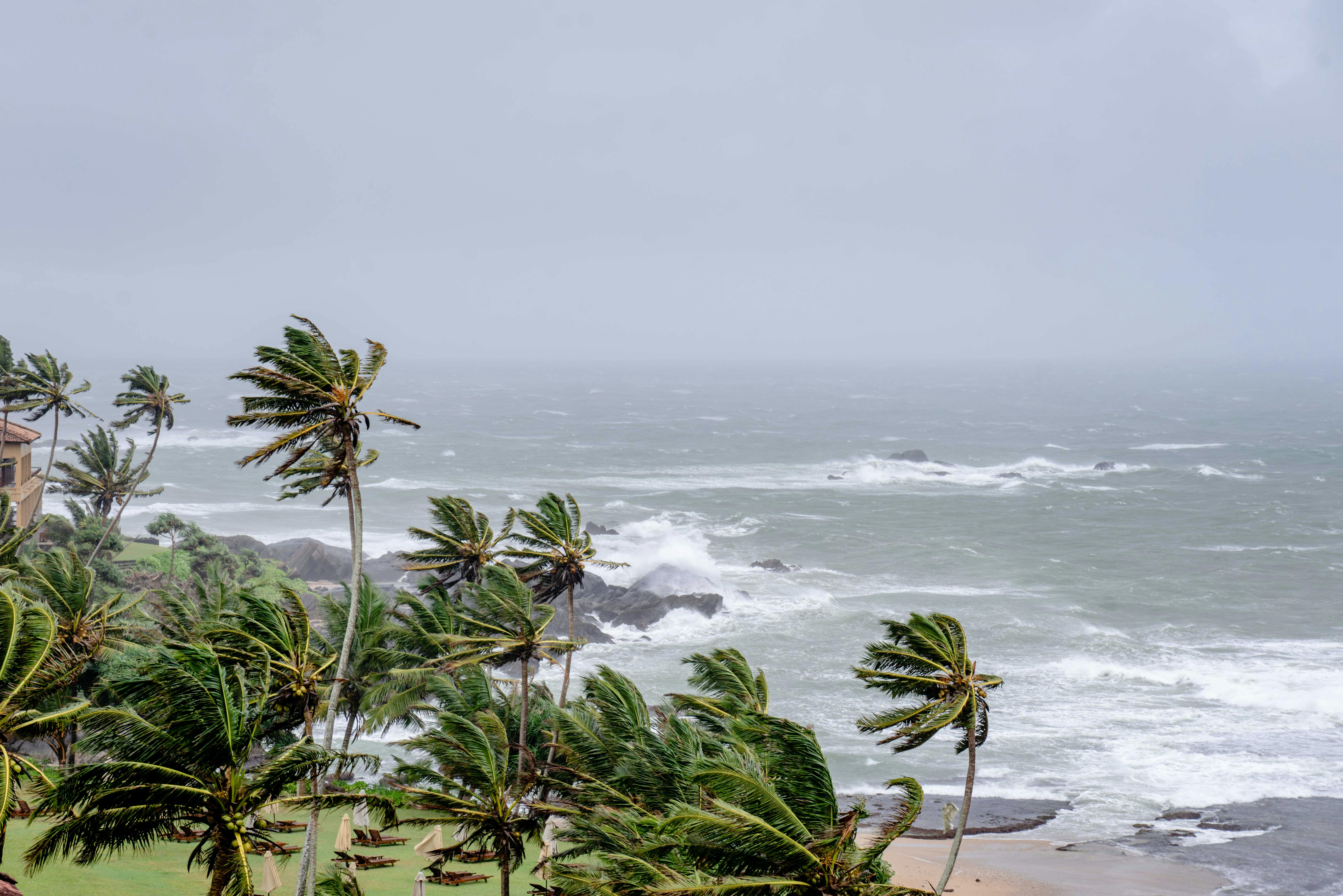
Even in an active season, long quiet stretches occur when conditions across the tropical Atlantic look otherwise favorable. One recurring cause is a mass of dry, dusty air that travels west off the African continent.
Where the layer comes from
Air over the Sahara becomes intensely hot and extremely dry during the warm months, and it carries fine mineral dust lifted from the surface.
As that air moves west over the ocean it rides above the cooler, moist marine layer instead of mixing into it, forming a distinct elevated layer.
The layer travels thousands of miles across the Atlantic, and its dust load is detectable from satellite and sometimes visible in hazy skies far from its origin.
Why dryness disrupts a developing storm
A tropical system depends on tall thunderstorms that release heat as water vapor condenses, and that heat release is what lowers pressure at the center.
Dry air drawn into the circulation evaporates cloud droplets, and evaporation cools the air, which makes it sink instead of rise.
Sinking air in the middle of a developing system interrupts the thunderstorm activity the system needs, and the circulation loses its heat source.
How the layer adds stability and shear
Warm air sitting above cooler air creates a stable layer that resists vertical motion, which suppresses thunderstorms before they can grow tall.
The layer also travels with a strong wind at its base, adding wind shear across the levels where a young storm is trying to organize.
Stability and shear act on different parts of the process, so a system encountering both is being undermined from two directions at once.
Why the effect is seasonal
Dust transport is strongest in the earlier part of the Atlantic season, when the temperature contrast driving the outflow is at its peak.
It weakens later in the season, which is one reason the climatological peak for Atlantic activity falls after the dustiest weeks have passed.
This seasonality is part of why early-season storms in the deep tropics struggle while later systems in the same region develop readily.
What the dust does beyond the storms
The same dust reduces sunlight reaching the ocean surface, slightly cooling the water beneath the plume and further reducing the energy available to storms.
It also degrades air quality where it reaches land, and can produce hazy skies and vivid sunsets far from where it was lifted.
Deposited dust carries minerals that fertilize both ocean plankton and distant forests, which is a separate consequence of the same transport pathway.