
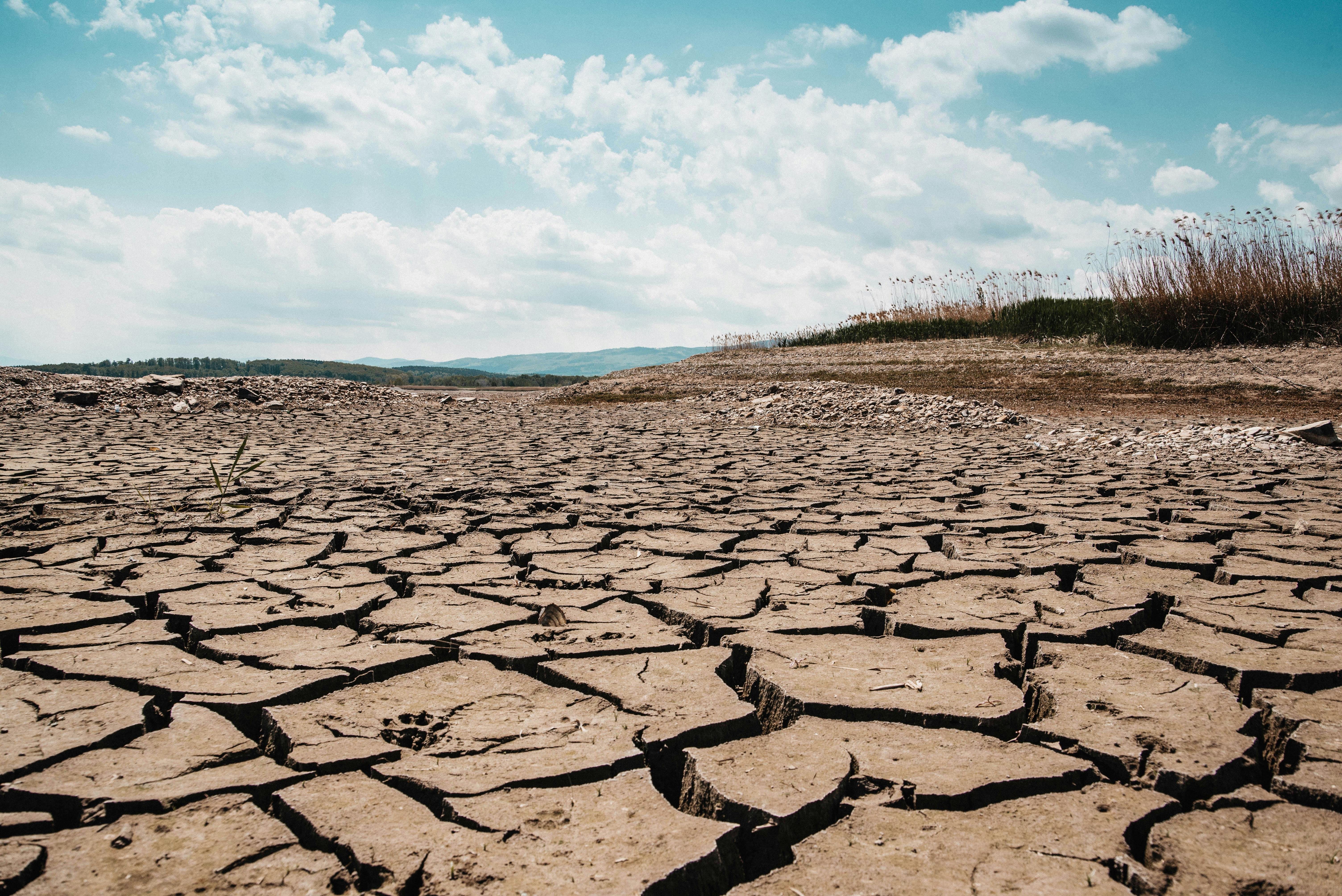
Heatwaves intensify when the ground beneath them has already dried out. The mechanism is a straightforward energy accounting problem, and it explains why the worst heat often follows a dry spring.
Where incoming energy goes
Sunlight reaching the ground is partly reflected and partly absorbed, and the absorbed portion has only two ways to leave.
It can raise the temperature of the surface and the air above it, or it can evaporate water from soil and plants without changing temperature at all.
Evaporation is a large sink. Turning liquid water into vapour consumes a great deal of energy, and while it continues the surface stays comparatively cool.
What changes when the soil dries
Moist soil supplies water freely, and most of the day's energy budget is spent on evaporation rather than heating.
Once the accessible moisture is exhausted, that pathway closes. The same sunlight arrives, but nearly all of it now goes into warming the surface and the air.
The result is a step change rather than a gradual one, which is why temperatures can jump once a region crosses from merely dry to genuinely depleted.
How vegetation extends and then ends the buffer
Plants draw water from deeper than bare soil evaporation reaches, pulling it up through roots and releasing it through leaf pores.
That keeps the evaporative sink open well after the surface layer has dried, which is why a vegetated region resists early heat better than bare ground.
Under prolonged drought plants close those pores to conserve water, cutting the flow deliberately. The buffer does not fade gradually; it is switched off.
Why the feedback runs both ways
Hotter air increases evaporative demand, drawing moisture out faster and shortening the time until the reservoir is exhausted.
Drier soil then produces hotter air, and each step makes the next one arrive sooner. Heat and drought reinforce each other rather than merely coinciding.
The loop breaks only when substantial rain arrives or the weather pattern holding the heat in place moves on.
Why forecasters watch soil moisture directly
Soil moisture is monitored through station networks, satellite sensors that detect near-surface water, and models that track rainfall and evaporation over time.
Because the state of the soil is known days or weeks in advance of a heat event, it improves confidence in how severe that event will become.
A given weather pattern over saturated ground and the same pattern over depleted ground produce noticeably different outcomes, and the difference is predictable.