
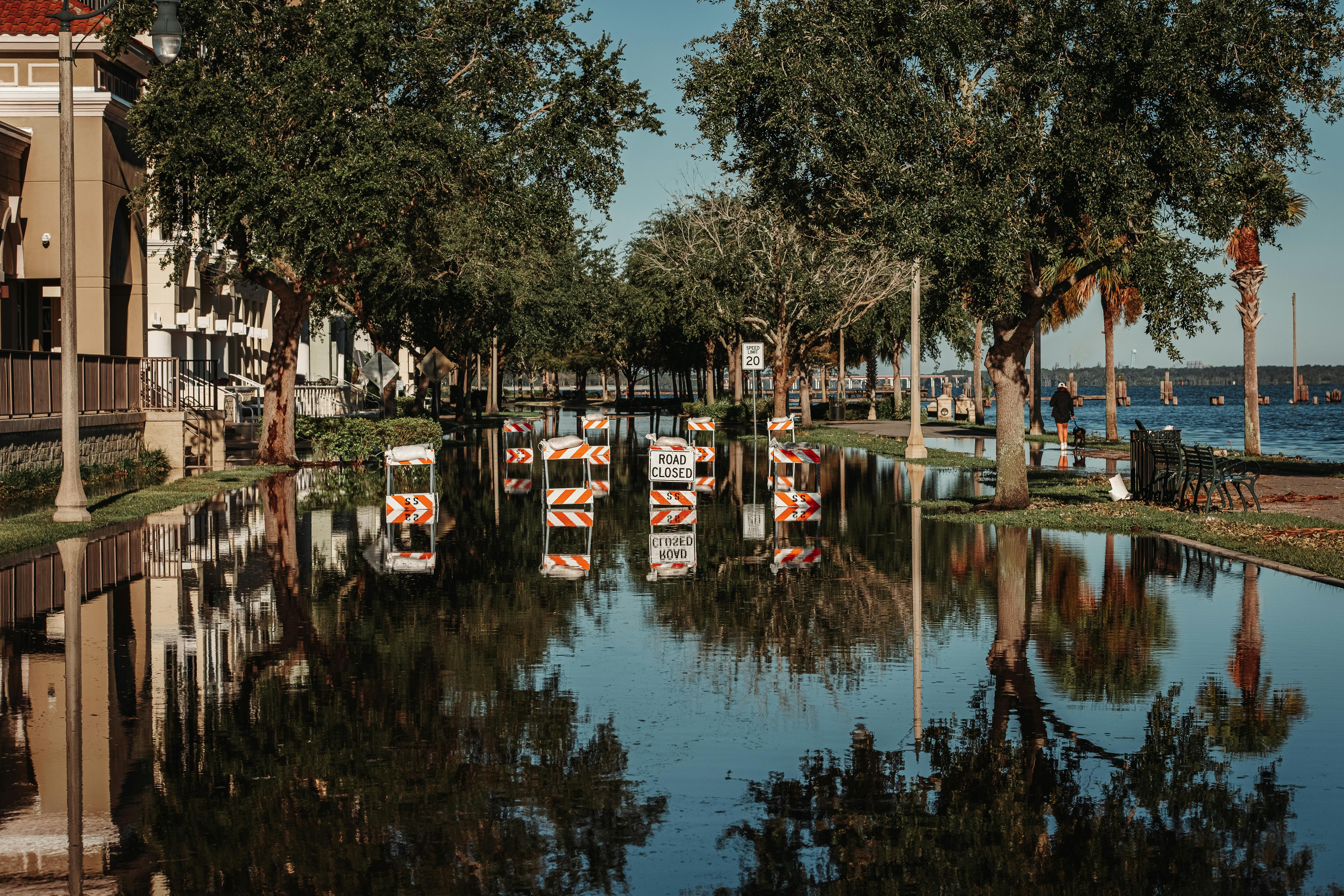
A large river can reach its highest level days after the storm that caused it has moved out to sea. The delay is a routing problem, and understanding it explains why flood warnings persist under clear skies.
How rain becomes streamflow
Rain falling on a basin does not enter the river directly. Most of it first soaks into the soil, and only the portion that exceeds what the soil can absorb runs across the surface.
That surface water gathers into small channels, which feed larger creeks, which feed tributaries, which eventually feed the main stem of the river.
Every stage of that journey takes time, and the time depends on distance, slope and how rough the ground is. A basin the size of several counties routes water for days.
Why basin size sets the timing
A small steep catchment concentrates its runoff within an hour or two, which is why flash flooding happens in narrow valleys and urban creeks during the storm itself.
A large flat basin collects water from far upstream, and the contribution from the most distant reaches arrives long after the contribution from nearby ground.
The main stem therefore rises gradually as successive tributaries deliver their share, and crests only once the furthest water has completed its journey.
What determines how much water arrives
Antecedent conditions matter as much as the storm. Rain falling on soil that is already saturated runs off almost entirely, while the same rain on dry ground may barely raise the river.
Frozen ground behaves like pavement, rejecting infiltration completely, which is why late winter rainfall can produce a disproportionate response.
Snowmelt adds a second supply that is not visible in any rain gauge, and rain falling on snow releases both at once.
How forecasters predict the crest
River forecast models combine observed and predicted rainfall with the physical properties of the basin to estimate how much water enters each channel and when.
Upstream gauges provide the strongest constraint, because water already measured at a point upstream will arrive downstream on a schedule that terrain largely fixes.
This is why crest forecasts far downstream are relatively confident, while forecasts for headwater areas depend heavily on rainfall that has not yet fallen.
Why the recession is slower than the rise
A river falls more slowly than it rises because the water leaving the channel is being replaced by groundwater draining out of the saturated banks and hillsides.
That slow release keeps levels elevated for days or weeks after the peak, which prolongs the strain on levees and delays access to flooded property.
A second storm arriving during that period lands on a basin that never emptied, so a modest rainfall can produce a higher crest than the first event did.