
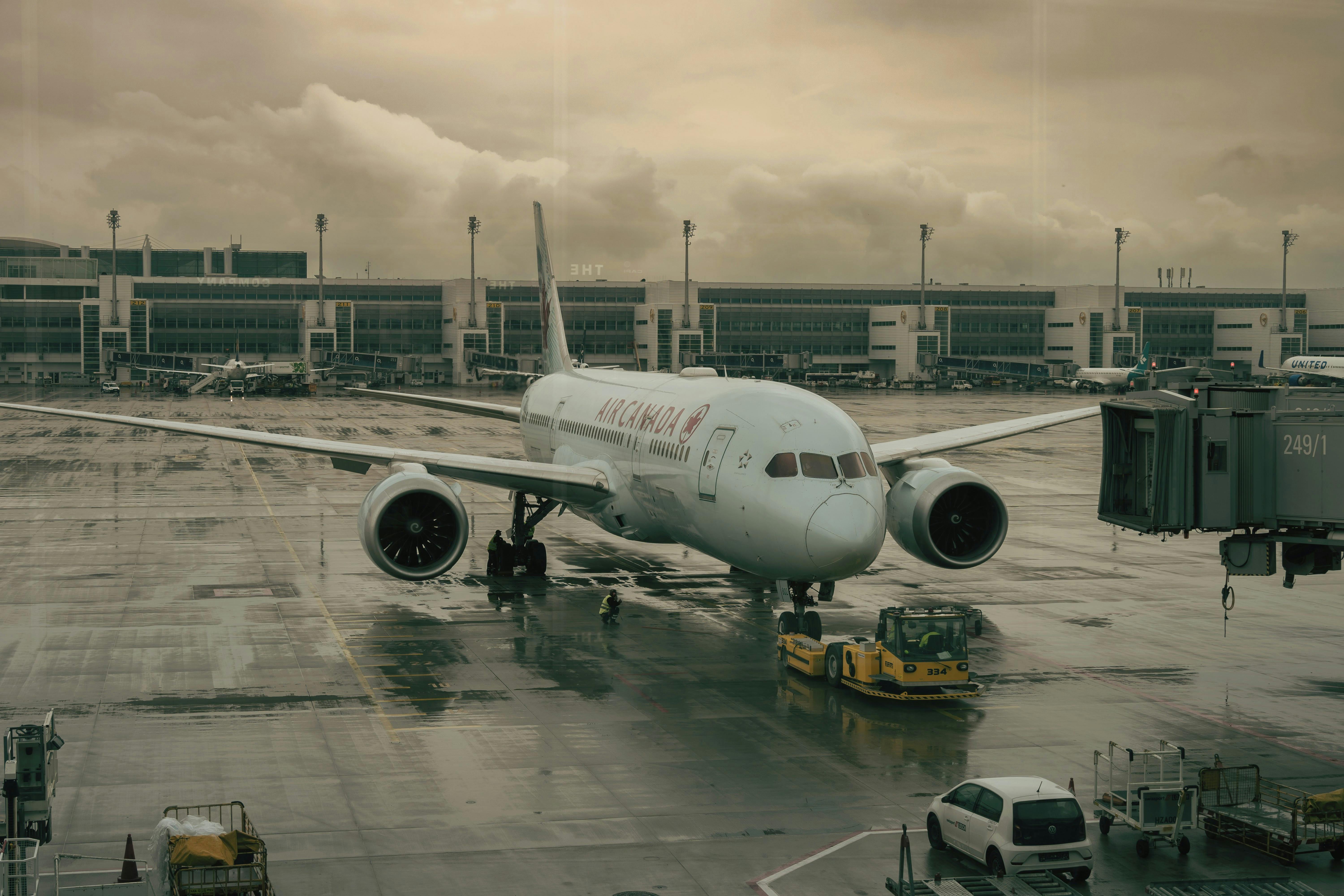
Passengers reasonably assume that turbulence accompanies visible weather. The type most likely to cause injury occurs in cloudless air, and the equipment on board cannot see it coming.
What produces turbulence in clear sky
Turbulence is caused by rapid changes in wind speed or direction over a short distance, which breaks smooth flow into chaotic eddies.
Those conditions occur most sharply at the boundaries of the jet stream, where very fast air sits adjacent to much slower air across a narrow zone.
The instability that forms there produces overturning waves and eddies at exactly the altitudes where airliners cruise, and it requires no cloud or moisture to develop.
Why radar cannot detect it
Airborne weather radar works by transmitting a signal and measuring what is reflected back, and it depends on precipitation to provide that reflection.
Clear air contains nothing for the beam to return, so the display shows an empty sky whether the air ahead is smooth or violently disturbed.
This is the fundamental difference from thunderstorm turbulence, which is associated with heavy precipitation that radar displays clearly and crews can route around.
How crews find it without seeing it
Forecast charts identify regions where the wind field suggests likely turbulence, based on the same model output used for other aviation planning.
Reports from aircraft that have already flown through an area are relayed to following traffic, which makes pilot reports the most reliable source available.
That information is inherently reactive, since it only exists after an aircraft has encountered the conditions, and the affected layer can shift within a short time.
Why mountains create a second source
Air flowing across a mountain range is forced upward and then oscillates downstream, forming waves that extend far above and beyond the terrain.
When those waves break, they generate severe turbulence at cruise altitude many miles from the ridge that produced them, again with no cloud necessarily present.
Wave turbulence explains why certain routes over mountainous regions have a persistent reputation for roughness in particular wind conditions.
Why the seat belt guidance is the whole answer
Encounters begin without warning, and the aircraft structure handles them without difficulty since it is designed for loads well beyond what turbulence imposes.
Injuries are almost entirely to people and objects that were not secured, occurring during the first seconds of an encounter before any announcement is possible.
Keeping a belt fastened whenever seated is the only measure that works, precisely because the event provides no notice to react to.