
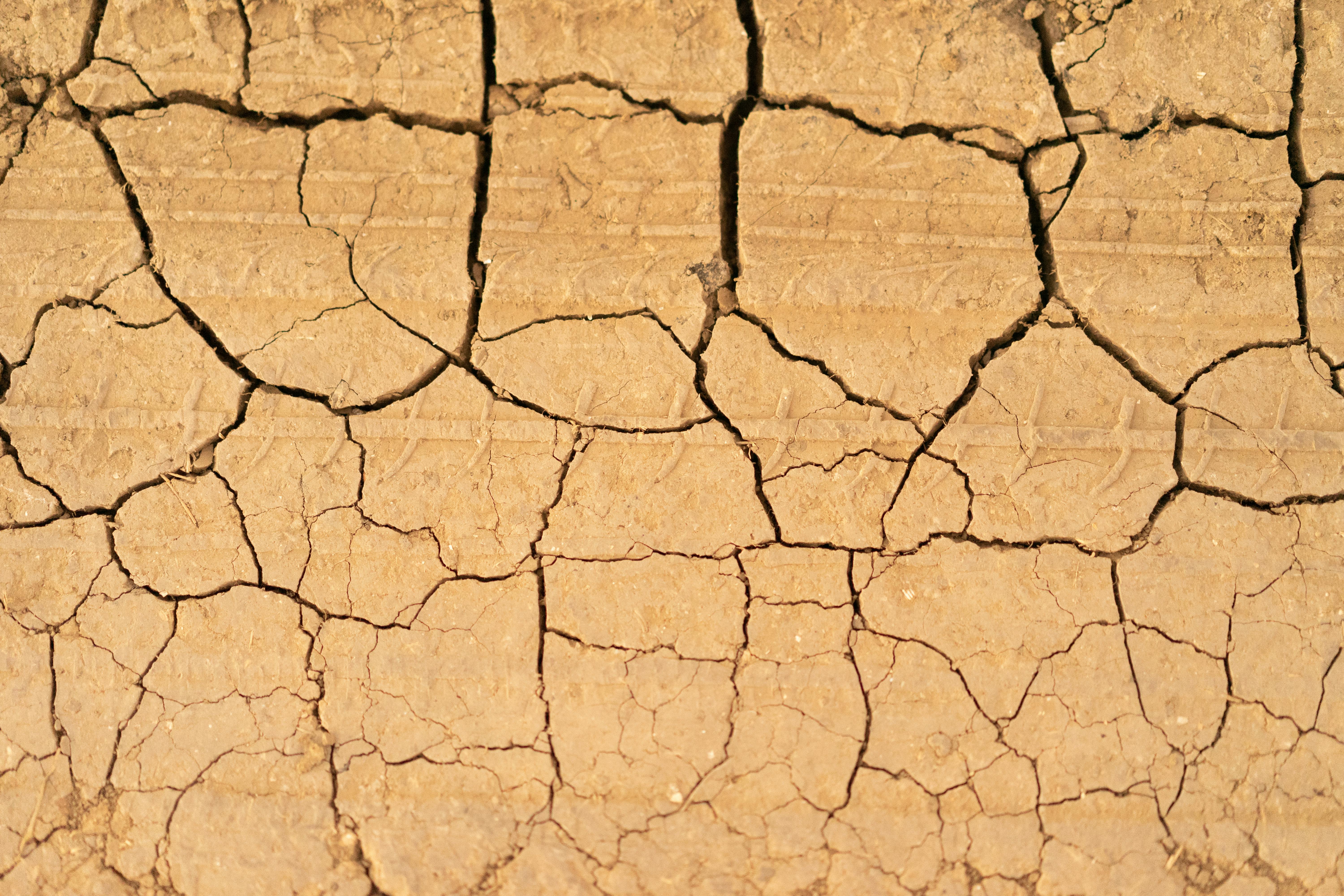
Drought is usually pictured as a slow accumulation of missing rain over seasons. A flash drought works from the other direction, driven by how fast the atmosphere pulls water out, and it can arrive within weeks.
Two ways a drought can start
The conventional route is a supply problem. Rain fails to arrive over months, soil and storage decline gradually, and the deficit is visible long before it becomes severe.
The other route is a demand problem. Rainfall may be only modestly below normal, but the atmosphere extracts water far faster than usual.
Demand-driven drought develops on a much shorter timescale, and monitoring built around rainfall totals is slow to register it.
What drives evaporative demand
Demand rises with temperature, because warmer air can hold more vapour and pulls harder on any available moisture.
It rises further when humidity is low, since a large gap between what the air holds and what it could hold accelerates evaporation.
Wind removes the moist layer that forms directly above a wet surface, and strong sunshine supplies the energy, so the combination compounds rather than adds.
Why crops fail before the maps update
Drought monitoring leans on indicators that accumulate over weeks and months, which is appropriate for a supply-driven event and too slow for this one.
Plants respond within days once the soil water within reach of the roots is gone, closing pores and halting growth.
The damage can therefore be done during the interval in which the official picture still shows normal or near-normal conditions.
Why timing decides the damage
Crops are far more vulnerable during flowering and grain filling than at other stages, when water shortage translates directly into lost yield.
A flash drought that coincides with those weeks does more harm than a longer, milder shortage that falls outside them.
This is why two events with similar rainfall deficits can produce completely different agricultural outcomes.
How it feeds back into the heat
Once soil moisture is exhausted, the energy that had been evaporating water goes into heating the air instead, and temperatures rise further.
Hotter air raises evaporative demand again, tightening the loop and extending the event beyond what the original pattern alone would have produced.
Breaking it requires rain substantial enough to rewet the soil, not a passing shower that evaporates within a day of falling.