
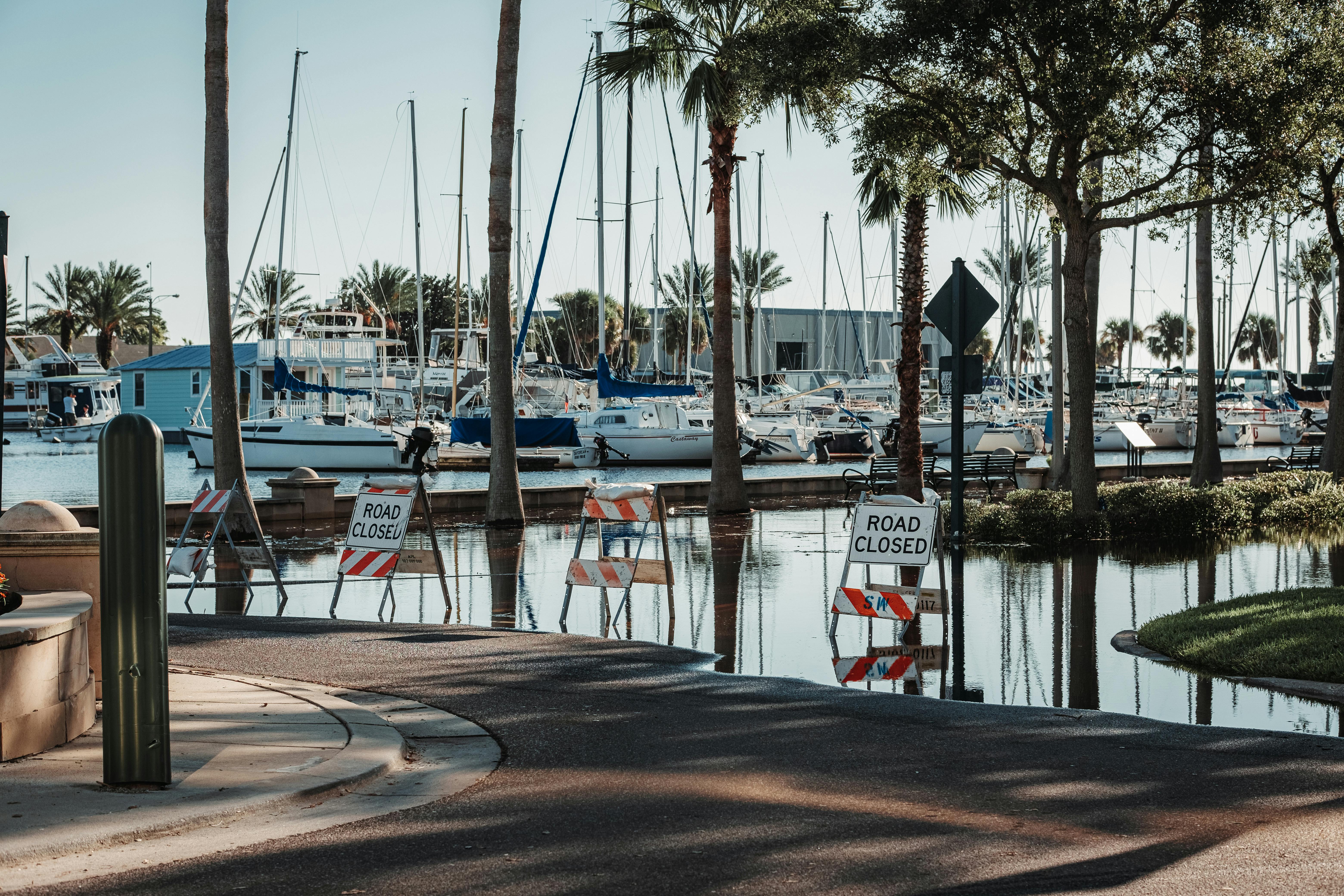
Levees protect land that would otherwise flood, and they work as designed most of the time. What they do not do is reduce the amount of water in the system, and that distinction drives most of their side effects.
What confinement does to the water
A river in flood naturally spreads across its floodplain, and that spreading both stores water temporarily and slows its downstream progress.
A levee prevents the spreading, so the same volume must pass through a narrower cross-section, which raises the water surface and increases velocity.
Higher and faster water inside the leveed reach then arrives downstream sooner and in greater concentration than it would have without the confinement.
How risk transfers to neighbors
Raising the water surface on one side of a channel raises it on the other side too, so an embankment on one bank increases exposure on the opposite bank.
Downstream communities receive a sharper peak because the floodplain storage that would have attenuated it has been removed upstream.
The cumulative effect along a heavily leveed river can be substantial, since each segment passes its water along rather than absorbing a share of it.
Why protection encourages exposure
Land behind a levee becomes attractive for development precisely because it appears safe, and construction follows accordingly.
The value of assets in the protected area therefore rises over time, which means the consequence of an eventual failure grows even if its probability does not.
This pattern is well documented across river systems, and it is why some flood policy now emphasizes restoring floodplain storage rather than adding height.
What happens when a levee is overtopped
A levee is built to a design flood, and water exceeding that level flows over the top rather than being held back.
Overtopping frequently leads to breach, because water pouring down the back face erodes the embankment from the protected side.
Flooding behind a failed levee is far more violent than the gradual inundation that would have occurred without one, since a large head of water is released through a narrow gap.
Why interior drainage floods anyway
A levee blocks water moving in both directions, so rain falling behind it cannot drain into the river while the river is high.
Pump stations exist to move that water over the embankment, and their capacity determines whether the protected area stays dry during a prolonged event.
Communities behind intact levees are flooded by their own rainfall more often than by the river, which is the failure mode residents least expect.