
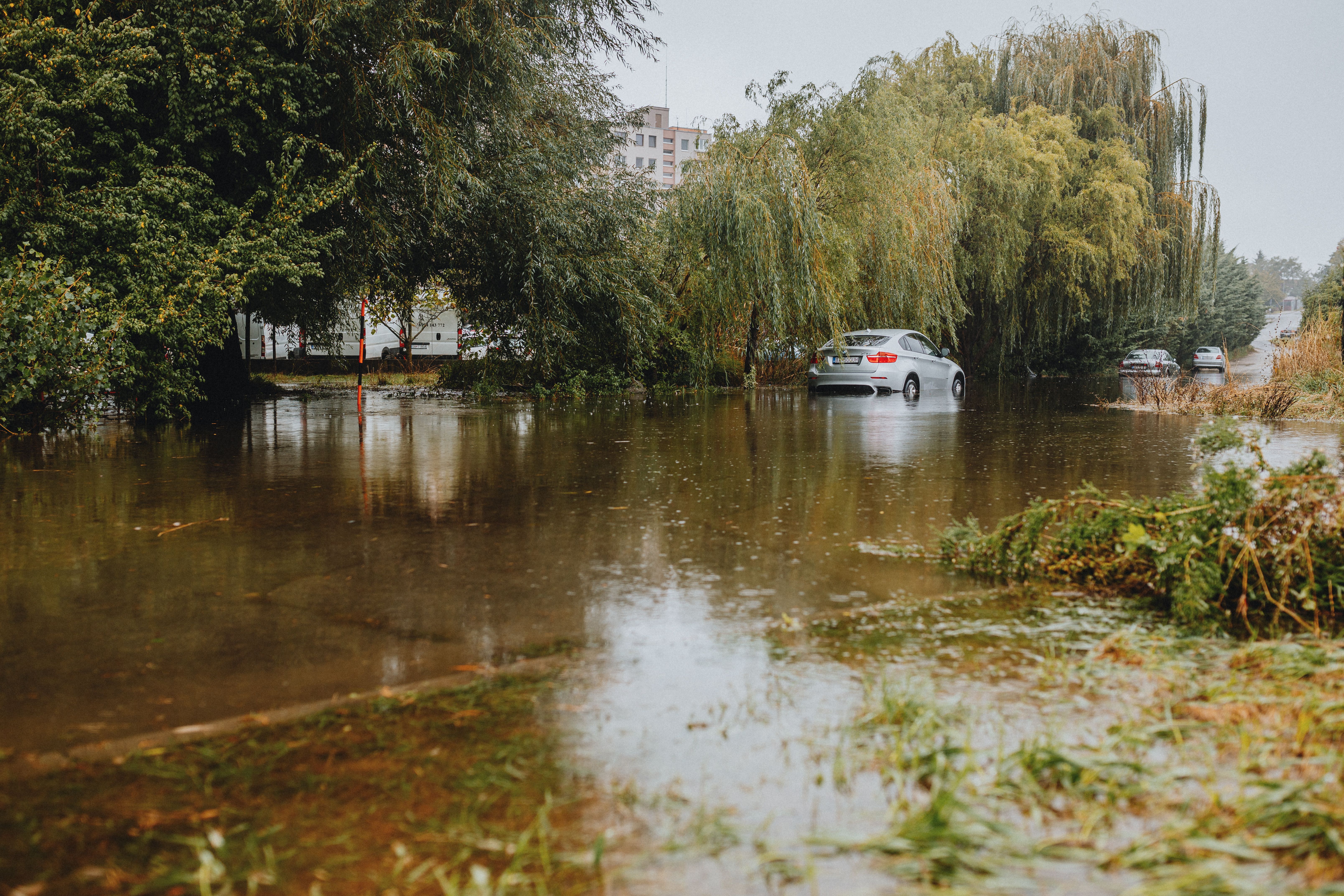
Cities flood from rainfall that rural ground absorbs without incident. The difference lies in what the surface does with water and in the capacity of the system built to carry it away.
What impervious cover changes
Soil and vegetation absorb a large share of rainfall, releasing it slowly to groundwater and streams over following days.
Roofs, roads and parking areas absorb none, so nearly the entire rainfall becomes runoff within minutes of reaching the ground.
The volume arriving at any low point is therefore far greater and arrives far faster than it would from the same area of open ground.
Why the peak arrives so quickly
Smooth paved surfaces offer little resistance, and water crosses them at speeds that undisturbed terrain never permits.
Storm drains and lined channels are engineered to move water efficiently, which by design shortens the travel time from where rain falls to where it collects.
The result is a sharp, high peak rather than a broad, slow rise, and the interval between the start of a downpour and street flooding can be a matter of minutes.
How drainage capacity sets the limit
Storm sewer systems are sized to a design storm chosen for economic reasons, since building for the rarest events would be prohibitively expensive.
Rainfall exceeding that design rate does not disappear. It backs up at inlets and travels overland along streets, which become the secondary drainage path whether or not anyone planned for that.
Because streets follow the same low ground that natural channels once did, the water often reoccupies the route it would have taken before development.
Why maintenance matters as much as design
Inlets blocked by leaves, sediment or debris reduce capacity sharply, and a system operating below its design capacity fails at rainfall it was built to handle.
Downstream conditions matter too, since a receiving river already running high can prevent the system from discharging at all.
When that happens the pipes fill from the outlet end backward, and water surfaces through inlets rather than draining into them.
Why the most dangerous places are the least obvious
Underpasses, basement entrances and depressed roadways collect water with no outlet, and depth increases faster there than anywhere else.
Moving water on a road conceals whether the pavement beneath it is intact, since flows strong enough to flood a road are strong enough to undermine it.
A vehicle loses traction in surprisingly shallow moving water, which is why turning around remains the single most effective response.