
Space weather effects arrive in stages rather than all at once. The first disruption reaches Earth in minutes, long before the storm most people associate with the event.
Why the effects arrive separately
A solar eruption produces electromagnetic radiation, energetic particles and a cloud of magnetized plasma, and the three travel at very different speeds.
Radiation travels at the speed of light and arrives in roughly eight minutes, giving no warning at all since the observation and the effect are simultaneous.
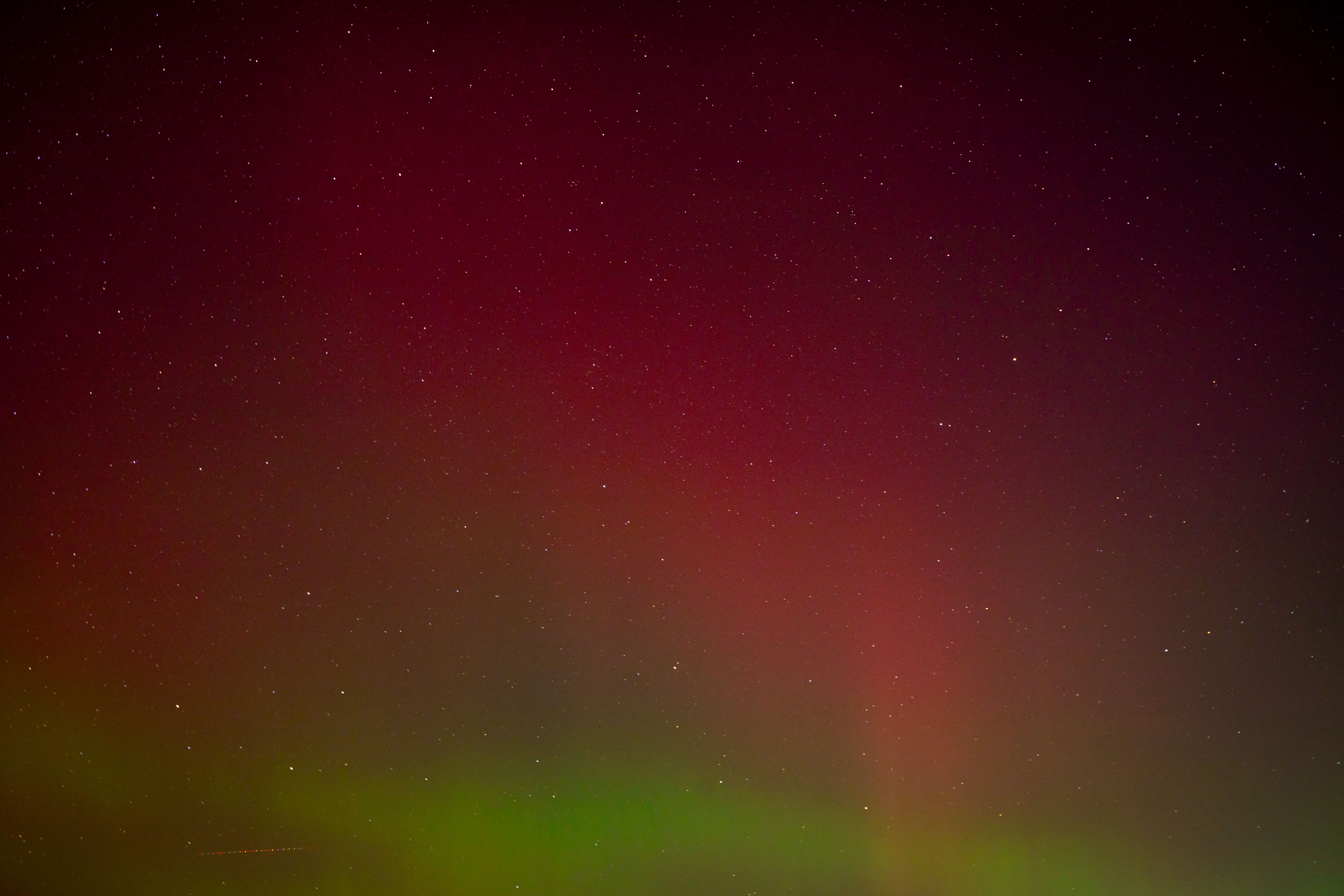
Energetic particles follow within tens of minutes to hours, and the plasma cloud takes a day or more, which is what produces the geomagnetic storm and the aurora.
What the first arrival does
The burst of radiation includes intense output at short wavelengths, which is absorbed in the lowest part of the ionosphere.
That absorption sharply increases the number of free electrons in a layer that is normally weakly ionized during the day and nearly absent at night.
Radio signals in the shortwave band, which normally reflect off higher layers to travel long distances, are instead absorbed while passing through the disturbed lower layer.
Why only the daylight side is affected
The absorbing layer is produced by radiation arriving directly from the sun, so it forms only where the sun is above the horizon.
Circuits crossing the sunlit hemisphere degrade or fail entirely, while circuits on the night side continue operating normally.
The affected region moves as the earth rotates, and the disruption fades within minutes to hours as the flare subsides and the layer recombines.
Who still depends on shortwave
Aviation on transoceanic and polar routes uses shortwave for communication where satellite coverage is limited or unreliable at high latitudes.
Maritime operations, emergency services and amateur networks rely on the same bands, particularly where infrastructure is absent or has failed.
Polar flights are frequently rerouted during these events, which adds distance and fuel, because the combination of degraded communication and elevated radiation exposure makes the route unattractive.
Why the sequence is useful
The immediate blackout functions as an early indication that a significant eruption has occurred, before any slower-moving component arrives.
Forecasters use the flare observation together with imagery of the corona to determine whether a plasma cloud was launched toward Earth and when it might arrive.
The first disruption therefore doubles as the opening notice for everything that follows over the subsequent days.