
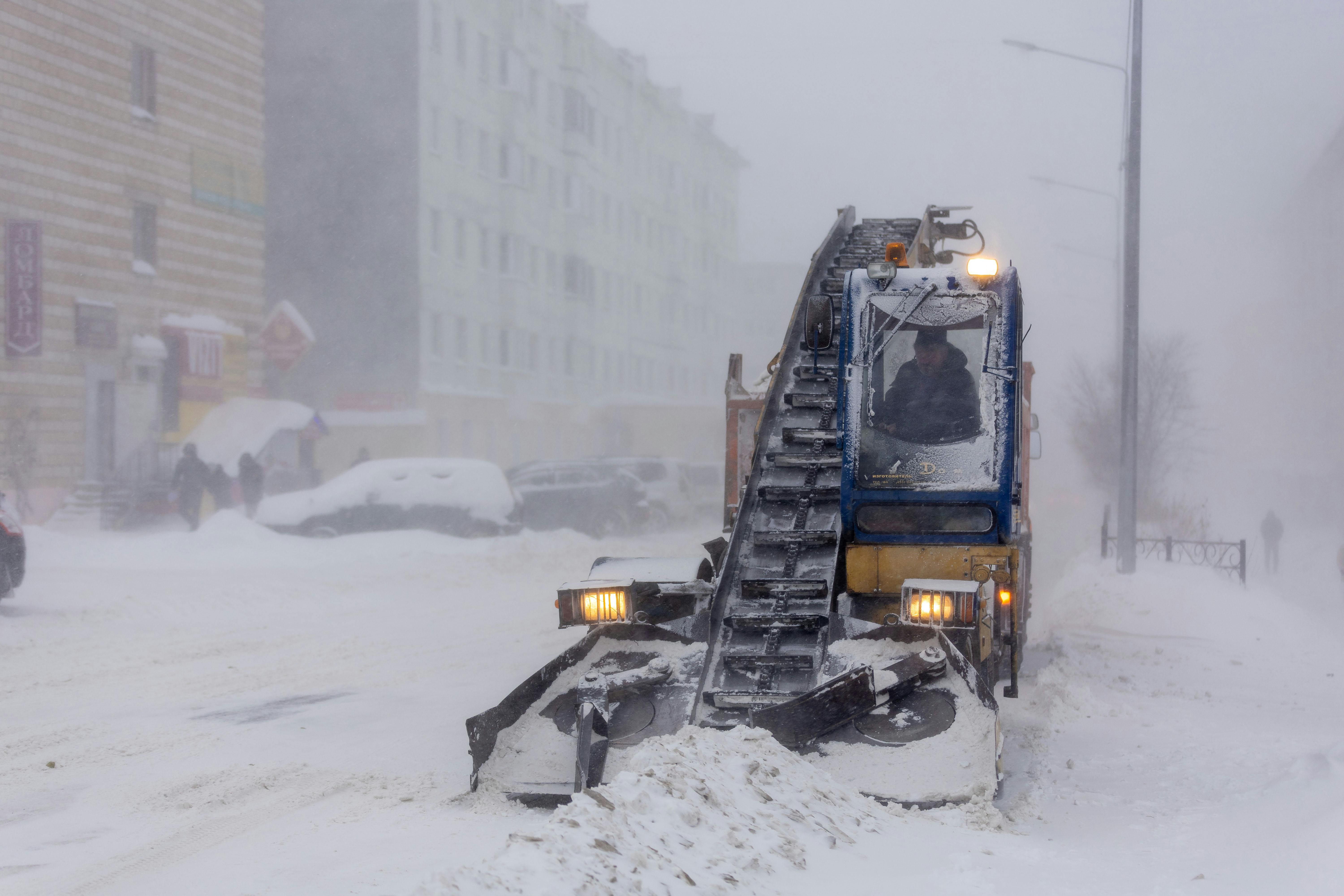
Rock salt is the backbone of American winter road maintenance, and it fails predictably below a certain pavement temperature. The reason lies in how it works at all.
Salt works by lowering the freezing point
Dissolved salt interferes with water molecules organizing into ice, so a salt solution remains liquid at temperatures where pure water would freeze.
The effect grows as concentration increases, but only up to a limit set by how much salt water can hold in solution.
Past that limit additional salt simply sits on the road as solid crystals, contributing nothing to melting and washing away with runoff.
Salt must dissolve before it can act
Dry salt scattered on dry frozen pavement does very little, because it needs liquid water present to begin forming a solution.
Traffic helps by crushing crystals and mixing them with moisture, which is one reason treated roads clear faster where vehicles are moving.
Very cold pavement provides little liquid water, so the process that salt depends on barely starts, compounding its reduced chemical effectiveness.
Brine is applied before the storm arrives
Crews increasingly pretreat roads with a salt solution sprayed in advance, which dries into a residue that prevents ice from bonding to the pavement.
Because the salt is already dissolved, it acts immediately when precipitation begins, rather than waiting for melting to create a solution.
Brine also stays where it is applied instead of bouncing off the road surface, which reduces the quantity of material needed for the same result.
Colder conditions require different chemistry
Other chlorides remain effective at lower temperatures and are often blended with rock salt or used to treat it before spreading.
These alternatives cost more and have their own drawbacks, so they are typically reserved for the coldest conditions or for critical routes.
When temperatures fall past the point where any chemical treatment is practical, crews switch to sand, which provides traction without attempting to melt anything.
Pavement temperature is the operative measurement
Road surfaces gain heat from sunlight and lose it to clear skies, so pavement can differ substantially from the air temperature reported nearby.
Bridges cool from below as well as above and reach freezing before adjacent roadway, which is the reason for the familiar warning signs.
Roadside sensors report pavement temperature directly, allowing crews to select material and timing against the surface rather than against the forecast air.
Those sensors also report whether the surface is wet, frozen or already chemically treated, which lets a supervisor decide where a second pass is genuinely needed.