
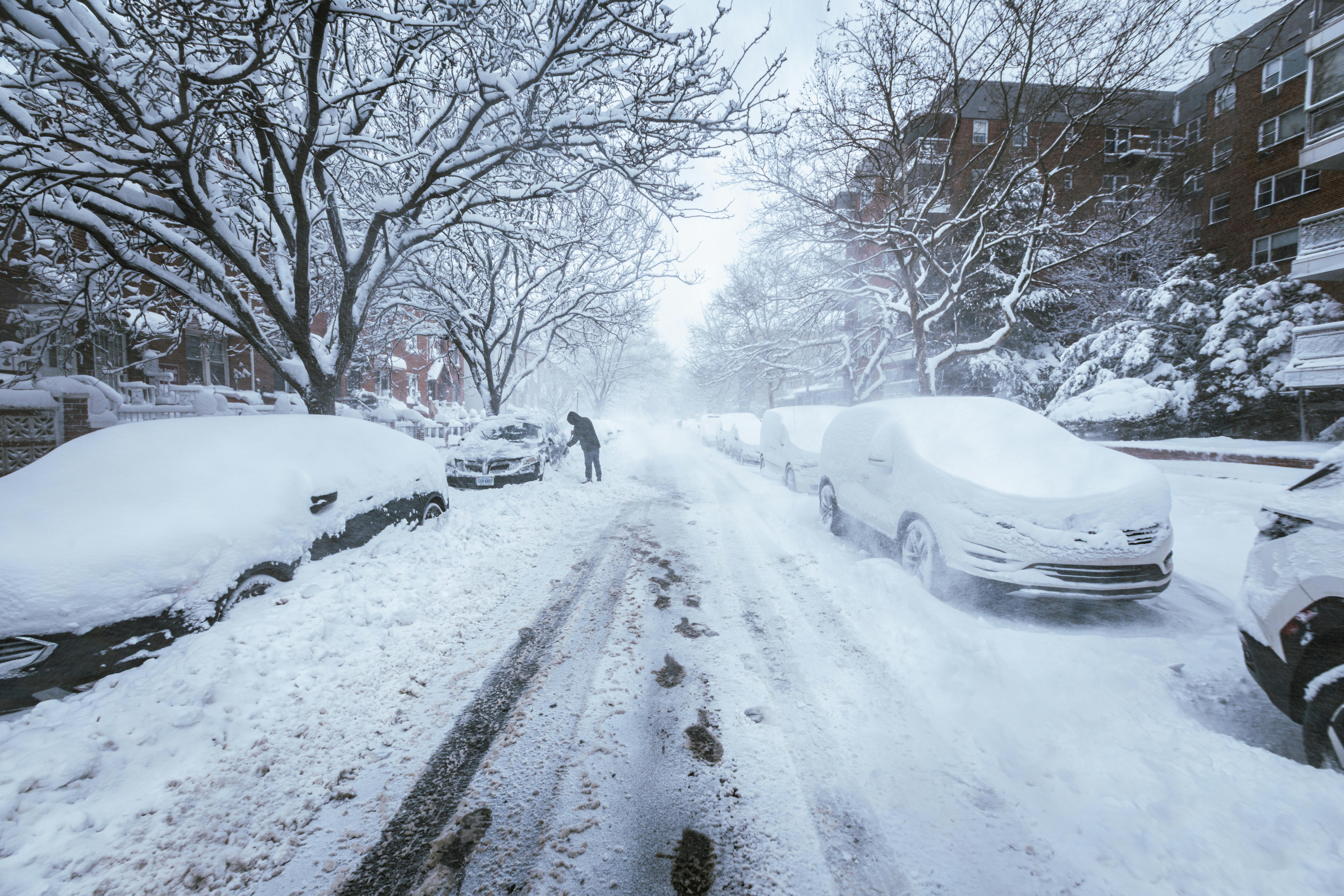
Two storms delivering identical water content can leave very different depths on the ground. The conversion between water and snow is not fixed, and forecasting it correctly is a large part of forecasting accumulation.
What the ratio describes
Snow-to-liquid ratio expresses how many inches of snow result from one inch of water, and it varies across a wide range from storm to storm.
The variation comes almost entirely from how much air is trapped between and within the crystals, since the ice itself has a fixed density.
A commonly quoted average exists, but applying it to any particular storm is a source of large error in either direction.
How temperature shapes the crystals
Ice crystals grow into different forms depending on the temperature and humidity where they form, producing plates, columns, needles or the branched dendrites most people picture.
Branched crystals interlock loosely and trap a great deal of air, which produces low-density snow that piles deep.
Crystals forming closer to the melting point are simpler and often partly melted, so they pack together tightly and produce shallow, heavy accumulation from the same water.
What happens on the way down
The crystal that forms aloft is not necessarily what lands, since it passes through layers with different temperatures and moisture on the way.
Partial melting and refreezing, riming by supercooled droplets, and collision with other crystals all alter the final structure.
A crystal that arrives rimed and rounded settles into a much denser layer than the same crystal would have if it had fallen through colder air.
Why wind reduces depth
Wind breaks fragile branched crystals into fragments during the fall and again after they land, and fragments pack far more tightly than intact crystals.
Blowing snow is therefore denser than snow that falls in calm conditions, and the measured depth is lower even when the water content is identical.
Drifting compounds the measurement problem, since it removes snow from exposed ground and deposits it elsewhere, making any single depth reading unrepresentative.
Why the ratio matters beyond the forecast
Roof loading depends on the weight of accumulated snow rather than its depth, so a shallow dense fall can be a greater structural concern than a deeper light one.
Water supply forecasting depends on the water contained in mountain snowpack, which is why snowpack is surveyed by weight rather than by measuring depth alone.
Clearing operations plan around both, since dense snow is far heavier to move and light snow drifts and blows back onto cleared surfaces.