
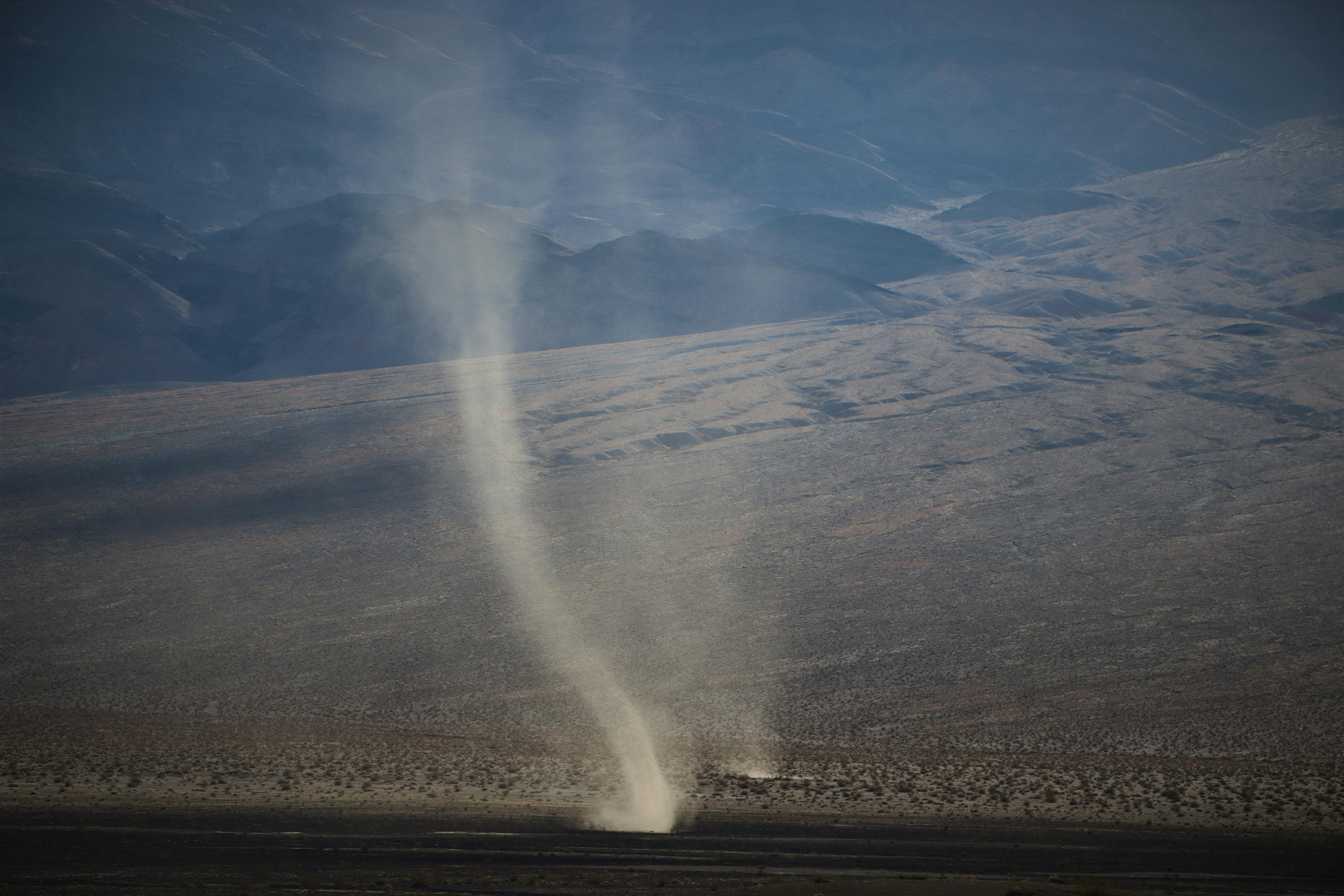
A tornado's rating is assigned after it is over, by teams examining what it damaged. The rating describes wind speed, yet the wind is almost never measured, and the reason is practical.
Why direct measurement rarely happens
Weather stations are spaced too widely for a tornado, which is typically a few hundred yards across, to pass over one.
Instruments that do lie in the path are frequently destroyed or lose power before the peak wind arrives, so the record ends before the value of interest.
Mobile radar can measure winds inside a tornado, but it samples above the ground rather than at the surface and is present at only a small fraction of events.
How the damage scale works backward
Survey teams identify what was damaged and classify it against a catalog of structures and vegetation, from outbuildings and homes to towers and trees.
Each type has a set of described damage levels, and engineering judgment associates each level with the range of wind speed likely to have caused it.
The rating for the tornado is taken from the most severe damage found anywhere along its path, so it describes a peak rather than a typical intensity.
Why construction quality changes the rating
A poorly anchored house fails at lower wind speeds than a well-built one, and the damage it shows implies a lower wind than the same destruction to a stronger structure.
Surveys account for this by examining how a building was fastened together, which is why teams inspect foundations and connections rather than photographing rubble.
The scale is therefore a joint statement about the wind and about what it encountered, which is a limitation acknowledged in how ratings are used.
What happens over open country
A strong tornado crossing farmland with nothing to destroy leaves little evidence of its intensity, and it can only be rated by damage to trees or the ground surface.
Such tornadoes are commonly assigned lower ratings than they deserved, simply because no structure was available to record the peak wind.
This bias affects long-term statistics, since the same tornado would rate higher if it had crossed a populated area.
Why the record is difficult to compare across decades
Reporting has improved as population, communication and storm chasing have expanded, so weak tornadoes that once went unrecorded now enter the count.
Survey practice and the rating scale itself have also changed, which shifts the boundaries between categories over time.
Analysts therefore treat trends in the strongest tornadoes, which are the most reliably recorded, as more meaningful than trends in the total count.